Monday, November 25, 2013

Unintentional Ideas

In "The Practice of Everyday Life," Michael de Certeau explains how theories or popular culture can apply to everyday life. He doesn't want to talk about the subject. He wants to make it possible for people to talk about this subject. He continues by explaining that previously we considered the individual, but we should really analyze groups based on social interactions, not how an individual sits within a group. He acknowledges that this could further emphasize the majority and take away from the minority, but comes up with solutions to this. One aspect of his discussion focuses on the consumption of goods. Certeau explains that we shouldn't only consider the producers intention but how a product is used. This led me to consider this in relation to literature.

After analyzing several novels, a reader may wonder how much of the symbolism exists purposefully on the author's part and how much of it has slipped into a book. Considering Certeau, it is reasonable to suggest that an author can write and present an idea as they wish, but the reader then gains control of its interpretation. I wondered about the insertion of symbolism for a long while. Fortunately, I had the pleasant experience of meeting with an author over the summer and got to ask this very question. He explained the some symbolism is certainly on purpose, but that he has also unknowingly added ideas into his novels.

More than just the interpretation of books, I think Certeau is suggesting that we cannot always know how products will be consumed or what the response to them will be. That is where the interesting study lies. Rather than focusing on the producer, we should consider what the consumer does with the product.

Friday, November 22, 2013

Critiquing Culture

In "Distinction & the Aristocracy of Culture," Bourdieu compares pure taste with naive taste. These are characteristics based on class and upbringing. Someone with pure taste is likely higher class and has learned to appreciate things on a deeper level. They look for details within the work and then decide on its quality. In contrast, people with naive taste come from lower classes and look at art in a superficial manner. They only classify it as good or bad.

We can consider Bourdieu's ideas in thinking about movie critics. Often when we go see a movie, we either consider it good or bad and many people don't think about it on a deep level. This doesn't have to be because they are naive thinkers as Bourdieu asserts, but merely that they want to relax on a Friday evening and not have to think. Nonetheless, they are not using an analytical view. Critics, however, look at the movies on a deeper level. They hunt for characteristics that aren't superficial, though this doesn't excuse flaws on the surface from being critiqued.

These different ways to view movies come into conflict when we look at a site like rottentomatoes.com. Often critics and the general audience are in direct opposition to one another because they watch the movie in a different way. Take the 2013 version of The Great Gatsby for example. Less than half of critics liked it (49%), while a majority of the general audience (68%) did like the movie. If you read some of the reviews, they watched them in different ways.

 One critic stated, "There are no two ways about it: The Great Gatsby is misconceived and misjudged, a crude burlesque on what's probably American literature's most precious jewel." He is clearly comparing the movie to the book and his expectation was that it would try to do it justice. 

An audience member gave the review 4/5 stars by stating "I had forgotten everything about the book, so it seem to be a fresh telling of an old story!" We can't even consider these two review to be using the same scale because they have very different standards. The audience member wanted to enjoy a movie, while the critic wanted to see an accurate portrayal of the book. 

These two reviewers demonstrate Bourdieu's concept of naive versus pure taste. One looks on a deep level, while the others merely wants to enjoy culture. 

Wednesday, November 20, 2013

Satire and Stereotypes

Both videos, "Girls Are Assholes: At a Bar" and "What a Girl's Makeup Means" perform satire. They take stereotypes, then exaggerate and distort them. But because there is some truth in them, we are able to find a message behind the ridiculous claims.

The first video exaggerates the idea that girl's won't date nice guys and are only drawn to guys who will treat them badly. It features two girls at a bar who rudely turn down what is probably a nice guy, opting for the creepy guy. In the second video, Jenna Marbles chooses to exaggerate the stereotype that a girl's makeup somehow informs onlookers to her sexual availability.

By exaggerating stereotypes, viewers should begin to question why they even exist. Some girls might not choose to date nice guys and others might use "suggestive" makeup as an actual suggestion, but these stereotypes are highly flawed. Why are we being led to think about women in such a way? Isn't it dangerous? And does it stop with women? Of course not. All stereotypes can be seen as dangerous. Many would claim that this view perpetuates rape culture just as other stereotypes lead to misinterpreted views. Here at Ohio University, a poster campaign for Halloween is trying to prevent this. Many uncultured people choose to continue the idea that all Native Americans wear headdresses and that kimonos are daily attire for the Japanese.

The videos and the poster campaign both present different approaches to solving the problem of stereotyping. The posters appear as informative and shocking, while the videos take relatable activities and show ridiculous they really are.

Monday, November 18, 2013

The Problem of Profit Over Value


In his final chapter, Storey discusses "The Politics of Popular." He talks about the impacts of popular culture in a general sense and sums of previous theorists. He also revisits hegemony and ideology. In talking about the economics of culture, Storey explains the importance of "exchange value leading to surplus value (profit)." He points out that while that is the goal, creating value is also important for items to sell.

The gap between creating profit and value has become quite an issue if we consider the current production of movies, tv shows, music, etc. Anything that can be published digitally automatically loses some value. Publishers have changed from letting a person own their purchase (as they would with a physical copy) to licensing the digital version. According to most terms of service agreements, the publisher can revoke usage of the item, regardless of whether the consumer "owns" a copy or not. This lessens the value, making consumers much less likely to buy digital copies. 

This becomes more of a problem when we consider the want for digital versions. Digital is much more convenient considering many people watch TV on their computers, tablets, etc. If consumers want the convenience of their shows on their devices, but the purchases have no real value, what are they left to do? Many choose to pirate copies, further reducing the value of those being sold. 

Publishers blame the consumers, but who is really at fault? In a capitalist environment, consumers are able to choose what to based on if they value it. If they do not value it enough, they won't buy it. Thus, it is the companies that need to reconsider their practices. Caught up in trying to gain surplus value without increasing actual value has broken the system. 

Friday, November 15, 2013

Can Buzzwords Carry Meaning?

In his essay, "Postmodernism and 'The Other Side,'" Dick Hebdige explains the trouble with the word postmodernism. He claims it is being used as a buzzword, applied to a too many varying situations, which caused to lose its meaning. But he goes on to show that while it is used excessively, the situations tend to have three main things in common: they are against totalization, teleology, and utopia. These common bonds allow the word postmodernism to be applied appropriately even though the decor of a room might not seem to have much in common with political fragmentation.

This problem is common as words become overused or too general. As Hebdige asserts, with popularity they become buzzwords. In recent years this has happened with the word 'nerd.' I wrote previously about the trouble with the changing definition of nerd and that it appears to apply to too many people. And if that was the case, nerd could no longer carry its former connotation and be considered its own culture.


After looking at postmodernism, I would suggest that, while nerd has become a buzzword, it can still remain a culture. Like when the popular term postmodernism is applied, nerd also has certain commonality for its usage, even if 'bronies' (adult men obsessed with My Little Pony) don't appear to have much in common with larpers (participants in Live Action Role Playing). Both groups, and all other subsets of nerd culture, are very passionate about their subjects or activities. The term nerd, while previously a negative way to describe an outsider, has grown to be used as a badge of pride for people who consider their interests to be different from the mainstream. Using the word nerd allows them to create a sense of community, which suggests that there is, in fact, still a growing nerd culture rather than the destruction of one.

Wednesday, November 13, 2013

Hyperrealism of Twilight

Within the context of postmodernism, Baudrillard presents the idea of hyperrealism in “The Precession of Simulacra.” He uses the experience of Disneyland to explain that sometimes the things we fantasize about become more real to us that what may would typically classify as “real life.” While intending to present us with an escape, it can also lead to a confusion between fantasy and reality. For example, we got to Disneyland to fantasize about being a child again, but our time at Disneyland is real, not merely a fantasy. 

This can present a problem. One example we can look at is the Edward Cullen obsessed fanatics of the Twilight fandom. While the Twilight series is meant to be enjoyed, some readers and viewers have taken their liking of Bella’s vampire companion to an extreme. This has has changed their Twilight fantasies into their reality. A quick search of Edward Cullen reveals the contrasting views of love and hate for the character. Those on the side of love (perhaps crossing over into obsession) make us question how much of a fiction they believe this book/movie to be.  Many of the memes even reflect the idea that no boyfriend could compare to Edward Cullen. This idea presents a conflict between what we would consider should be a person’s real life and what has become of it. 

Here there are “Ten Reasons to Love Edward Cullen”:


Despite the books young adult audience, mothers have even fallen into the craze:


Baudrillard’s view of hyperrealism suggests that originally readers of Twilight were seeking an escape, a fantasy. However, by being so drawn into the series it quickly become their real life. If a person thinks, reads, watches and talks about Twilight everyday, how can it only be a fantasy? While Edward will never become real (sorry Twilight fans!), the series has become their real life. 

Friday, November 8, 2013

The Big Bang Theory (TBBT) follows Leonard and Sheldon, two physicists, as they deal with living across the hall from a pretty, blonde wannabe actress whom Leonard inevitably has a crush on. The show also features their two friends Raj and Howard. 

TV, while often exaggerated, can be considered a representation of the norms in our society. So like many other sitcoms, most of the characters are extroverts on TBBT. But there is one surefire introvert on TBBT, Sheldon. However, many people have often mistaken Raj to be introverted too. This is likely due to societal misconceptions about introverts, which can be understood by considering Wallace and Cooper’s idea of Queer Rhetorical Agency and the affects of discourse on a subject. 

The Huffington Post correctly states, “Being an introvert doesn't simply mean being shy, rather it refers to those who are energized by alone time.” Then they list out “8 TV Characters Who Explain What It Means To Be An Introvert.” One of their chosen characters is Raj Koothrappali. Except, he’s not actually an introvert. In the same post as their accurate description, they fall into the stereotyping that society often does to “introverts.” 

They explain that “he hides from social interaction with a hefty does of selective mutism. Unless there is alcohol involved, Raj is most comfortable whispering into his BFF Howard's ear.” Raj actually enjoys social interaction, but because he is shy, the Huffington Post considered him to be an introvert. His trouble interacting isn’t because he doesn’t want to speak with people, it is because he has difficulties speaking around pretty girls, a point Huffington Post failed to clarify. In several episodes, Raj is actually the one throwing parties for their friends and helps throw a party at the comic book store. If he were introverted, he would not relish in this kind of large environment. In the video below Raj talks about setting up a scavenger hunt with his friends. 


The above video is just one example of Raj's need for social interaction that he doesn't always get. He is certainly not the introvert he is mistaken to be. 

Sheldon Cooper, however, is a true introvert. He is uncomfortable having more than four friends and, like many introverts, likes to avoid large social gatherings and small talk. He thrives from being alone. When the group is invited to Penny’s Halloween party in Season One, Sheldon sits on the couch the entire time not quite understanding the people around him. Without the purpose of a costume contest, he doesn’t see the point in having the party. Also at the beginning of Season One, Leonard is interested in getting to know Penny and Sheldon explains, “Chat? But we don’t chat. At least not offline.” He is content with his small social circle and doesn’t want to disrupt this. As an introvert, it would be exhausting. 

This understanding of introverts can be related to Wallace and Alexander’s description of the misrepresentation of queer students. They critique rhetorical agency’s inability “to grapple substantively with queerness and queer theory.” Their two main problems are that it doesn't consider the needs of queer students, nor is it able to recognize how queer theory is understood and replicated in public discourse.

Like queer students who deal with these problems, many introverts have their fair share of problems and stereotyping as well. Just as the Huffington Post mistaken categorized Raj, many people are unable to identify if someone is an introvert or just shy. These two qualities can overlap, but more importantly, they don’t have to. 

Wallace and Alexander go on to discuss the intent behind “discourses that erase, marginalize, and pathologize others.” There isn’t always intent. But because it is ingrained in the way we talk and grow up that people who are not as social are wrong, introverts become misrepresented. 

In elementary schools teachers often try to get kids to “come out of their shell,” because they are uninformed in the difference between shyness and introversion. They also do not realize the toll it takes for an introvert to put a much greater effort into something that is natural for extroverted students. They see the student as the problem, instead of realizing they are the problem. Then as the teachers regularly ask the student to become more vocal and to make more friends, other students begin to think that the quiet kid has a problem. 

While Sheldon, unlike Raj, does accurately represent an introvert, the writers did not make his character merely introverted. They describe him as “Sheldony,” but many people with Asperger’s have noticed some uncanny similarities between themselves and Sheldon. The writing of his character stems from the idea that if someone is not extroverted (the societal “norm”), there must be something wrong with them, much like the elementary school teacher. 

The writers could have written Sheldon with some quirks and made him a relatable character to all introverts, but instead they went over-the-top with exaggerated stereotypes. By denying that Sheldon is actually someone with Asperger’s they further the misunderstanding that any person who doesn’t always want social interaction, doesn’t understand it. It adds to the discourse that introverts are social awkward and rude. And that they can’t understand social conventions. 

In this video we see Sheldon struggle with understanding sarcasm, a trait of Asperger's, not introversion.


Much like Wallace and Alexander suggest that teachers need to be better informed about the effects of heteronormativity, they also need to recognize the ingrained personality types within our society. They must consider that students who just don’t feel like talking in a large group, don’t have something wrong with them. By breaking down the understanding of what it means to be an introvert versus someone who is shy, the characters on TV will also be a more accurate representation of the types they are portraying. People won’t continue to consider all introverts as cold and won’t label all shy people as introverts. 

Monday, November 4, 2013

Doctor Who: An Example of Postmodernism


In Storey’s discussion of postmodernism, he gives an overview of the many understandings and applications of the concept. Just the very fact that there is not one understood meaning of postmodernism, shows that we utilize this way of thinking. It is a concept that closely resembles poststructuralism and is used to explain the complicated world we are living in. It diverges from modernism and critiques the idea that the world can be explained through science and logic. Rather than trying to be high art as modernism did, it takes a different course. This led several theorists to describe postmodernism as an economic activity. 

As Storey explains, the concept of postmodernism can be applied to many of the TV shows we watch. One fitting example is the British show, Doctor Who. At first glance, one might consider the scientific aspects and attempted explanation of our world as a modernist view, but there are many aspects that refute this idea. 

First, the Doctor does not try to explain the occurrences in time and doesn’t describe them as simplistic or linear. The events throughout the show occur in a manner much more complicated. He explains, “People assume that time is a strict progression of cause to effect, but *actually* from a non-linear, non-subjective viewpoint - it's more like a big ball of wibbly wobbly... time-y wimey... stuff.” This understanding of the world accepts the postmodern viewpoint that we cannot understand the progression of time. It is too complicated and is always changing. The show does describe some fixed points in time, but most are able to be altered. 

Another example is much like the Collins’ explanation of the multiple viewpoints in Twin Peaks. Doctor Who also does not stray from this. It would be easy to describe The Doctor as the protagonist and hero, but like most things in a postmodern world, it is much more complex than that. In the episode “The Pandorica Opens,” our view of The Doctor is turned on its head when all of his enemies throughout space and time work together to defeat him. The catch is that unlike most villains, they don’t consider themselves to be wrong. In many superheroes movies, the villain realizes that it is their role and embraces it. These characters actually consider The Doctor to be causing harm to the universe, which then forces the viewer to question their ideas about him and his actions. This can also be seen throughout the series in episodes like “Doomsday,” in which two of The Doctor’s enemies, the Daleks and the Cyberman, declare war on one another. Typically we view battle as black and white, with a good side and bad. This episode challenges that sort of perception. 

Another way that Doctor Who can be considered postmodern, is in the economic sense. The classic series, created in 1963 during the rise of postmodernism, was much more underground than the newer reboot. In 2005, BBC intentionally cast Christopher Eccleston, a well-known English actor in the role of the ninth doctor. They wanted the show to become more widely known, and it is not difficult to say they have achieved this goal. As Johnson explains, “[culture] is itself an economic activity, perhaps the most important economic activity of all.” It would be difficult to describe Doctor Who as without economic intentions and I am proving this theory right now: I am writing this while wearing a Doctor Who t-shirt and taking notes on Doctor Who post-its. 


Through its economic success, impossibly complicated storyline, and its twisting of our expectations of good and evil, Doctor Who is an excellent representation of postmodernism. 

Friday, November 1, 2013

From Niche to Mainstream


In “Black Postmodernist Practices,” Anders Stephanson interviews Cornel West. They discuss the postmodernism movement among the black community in America. West explains that it was much different for blacks because they had a different idea of reality than the typical upper-middle-class American. The postmodernist movement led to several black artist creations., including Parker’s jazz music. However, West explains that once it has reached a level of popularity amongst white Americans, it can no longer be considered unique to the black community. In the case of Parker, he was no longer “highbrow.” Another example, given by Stephanson is Michael Jackson. He became “a middle-American product,” not unique to the black community. 

In a much more broad sense, we can consider any product released as a part of a niche. Once it becomes a part of the larger pop culture group, can it still be considered niche? This is especially prevalent in thinking about nerd culture. Many nerds pride themselves on having read Lord of the Rings and Harry Potter (at the time of its release). They enjoyed video games with starting with the original Nintendo, or perhaps even Atari. These ideas were once considered unique to nerds. If mentioned outside of your circle of friends, others wouldn’t have a clue what you are talking about. Now they are all household names. 

Most people probably still don’t read Lord of the Rings, even some nerds haven’t due to its great length, but the movies have made them more accessible to the masses. Just as Parker made jazz more accessible to white people. We can consider this almost an inevitability of products with great quality. But does the widespread production of them demean their quality or remove their previous status? I would argue not. 


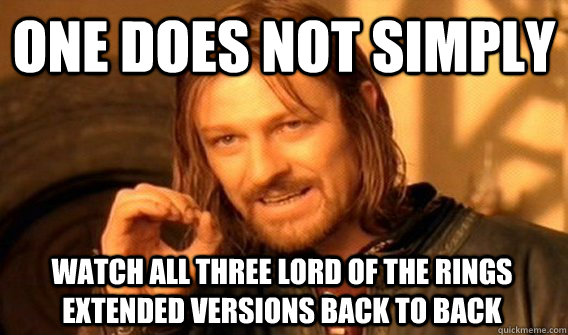
The first followers of jazz or Harry Potter have a sort of claim on the movements. They share a special connection that those who “jumped on the bandwagon” just don’t have to the products. Nerds probably sit and watch the 726 minutes extended edition, while the average consumer likely sticks with the original 558 minute running time. Early followers of Parker are more likely to know that he began his musical career with Jay McShann’s territory band. Both of these examples demonstrate that when there is a good product or performer, even if it is underground, there is a great chance that it can become a part of the mainstream popular culture. Even though our view of it may change, the origins of it do not. We do not need to consider it exiled from its previous community. 

Monday, October 28, 2013

The Problem with Race as a Category

In discussing the topic of race and racism, Storey brings up the idea of whiteness. It is considered to be the norm, despite white people not necessarily making up a majority of the world population. He explains that white exists outside of the idea of race and that only non-white people are considered to have a race, which is politically, not biologically determined. To further explain this idea, Storey suggests that if a white author writes a book, he/she will be described as an author; however, if a black author writes a book, he/she will be described as a black author, not just an author. When speaking, people of various races are thought to be speaking on behalf of their race, not just themselves as a white person would. 

For the most part, I can agree with Storey’s viewpoint; however, it is clear that he is coming from a western background. In the west, we do tend to consider race in the way he describes, but this is not necessarily the case if we travel to the west. His idea that a person of an outside race tends to be considered speaking on behalf of that entire race is quite true. Where he is wrong, is that the eastern hemisphere does not necessarily consider white to be the norm as he suggests is a global phenomenon. 

Traveling to Japan, I became very aware of this. As one of two Americans at my university, when asked a question about my opinion, I was considered to be speaking on behalf of all Americans. This became quite troubling because there were many times I knew that my opinion might not have been in the majority back at home. Just as we may often ask others what they think, I was asked what Americans think on various topics.

Not to downplay the issue of race, I think we do need to reconsider the idea that white people are without race or that his issues with the western world are not applied differently in other parts. I would say that it depends upon the country in which you are in. Certainly in the melting pot of America, we create a norm of something that should not be. However, that same norm cannot be applied to Japan, where the norm (and majority) is certainly those of the Japanese decent. 


Going back to the issue that one person is speaking on behalf of their race, this creates a problem, which I believe is also what Storey is suggesting. Just because all people classified into the same race, does not mean they are likely to share the same opinion. Just as all females or democrats or teenagers may not agree on the same issues. We cannot consider one person’s view to speak for the whole. This is one of the greatest problems with classification, which was also brought up as a part of feminism and queer theory and applies to any time in which we try to broadly describe a group. 

Wednesday, October 23, 2013

In-Game Avatar vs. Out-of-Game Self

In “Videogames, Avatars and Identity,” Zach Waggoner attempts to tackle some rather difficult questions, that I think all gamers regularly consider. He wants to know why we play video games and if they affect the development of our real-world identity. He admits the latter question  may be quite difficult, but questions many gamers, particularly those who play RPGs and finds out that while most people separate the concept of both their in-game and out-of-game identities, they are somewhat related. 

Waggoner’s question, “can video game play impact identity formation?” can be given a simple yes, but we should ask to what extent it is true. This question comes up in the news quite often when we see school shootings. Reporters are quick to ask whether the gunman had a history of playing violent video games. Sometimes yes, sometimes no. But does this affect their real-world identity or does their real-world identity affect their avatar? Waggoner gives examples of several gamers who are unable to play as an evil character. Even thought it is a video game, they still feel guilty. So, if people still react this way, how much of an effect could it really have on your reality? 


Personally, I can play a good character or an evil character. In Fable III, I murdered guards and ran from the law. Would I do this in real life? Not a chance. I’m one of the least violent people you will meet, but it sure was fun to pretend to have a different identity in game. What I mean to show with these examples is that while Waggoner’s respondents admit to sharing traits with their avatars, the question is, and probably always will, remain unanswered. We each play games differently and they affect us in contrasting ways. 

Monday, October 21, 2013

The Dangers of Labels

Butler begins her essay by admitting that she does not advocate for theories centralized around lesbians or gays. This is because she believes the act of theories puts a box on the concept of lesbian or gay, which can go against its purpose and become oppressing. She continues this skepticism with the labels 'lesbian' or 'gay,' because the labels set up expectations and limits on what the person can be. This is further complicated when those labels create a negative stereotype or the idea that a gay person is a lesser imitation version of a heterosexual person. The concepts surrounding these terms set up limiting expectations.

Butler's ideas of discourse regarding queer theory is very similar to those of Wallace and Alexander who also think the way we talk about the subject needs to be greatly reworked. Our current discourse sets up too many expectations. However, I think she differs from them and would like to lessen the use of the terms in general. That said, they all seem to have the same end goal in abolishing the current negative stereotypes. Butler certainly does not fit well with any of the structuralist theorists, as they consider putting a word in definite terms quite important, while she believes the opposite is true. Thus, she draws inspiration from post-structuralists. She mentions Foucault in suggesting that claiming the term 'homosexuality' as a means of discourse can be both limiting and empowering.

While I am straight and haven't had the struggle of Butler's in being put into a box and misunderstood because of one of her, presumably many, descriptors, I can try to relate. By using a loaded term such as lesbian to describe an individual, we negate all of their other attributes. This happens in another part of our culture that I do identify with. I am happy to classify myself as a gamer. So, I tell others that I am a gamer, yet when this information is relayed, I am called a 'gamer-girl.' It is not enough for me to exist with the rest of gamers, as a girl we must have our category because we are such a rare breed (as others may say). However, the term gamer-girl comes with certain negative stereotypes. I am assumed to be less knowledgable and not as skilled as someone who is just a gamer. Both of these examples show the danger of labels. It's natural for us to use them, but we need to consider the point at which they are oppressing instead of informing.

Friday, October 11, 2013

Romance Novels: Feminist or Patriarchal?

According to Radway, this is not a question we can yet answer. She explains that there are many types of romance novels within the genre and they all have different types of readers. Important to consider is that the readers of these novels do so with different purposes. Some read them to observe the contradictions between the novels and feminism while others read them because of "pressures exerted by developments in the larger culture." What these have in common, is that all of the readers are participating in a female community within our culture. However, because that may be where the similarities end, Radway tells us that what needs to be considered are the effects of reading romance, but this has proven difficult to track. In order to succeed, she suggests we need to create a new discourse fitting for the subject. 

Radway's discussions of the women taking part in culture and romance novels' affects, or lack of affect, on readers can be traced to Bazerman and Williams. Bazerman suggets that texts influence behavior. Whether these novels encourage readers to take action or not, shows that their reading of the texts has some effect. Williams suggests that we do not merely consume culture as Marxism seems to suggest, but that we partake in culture. Precisely what Radway describes. She also discusses the idea of using text to reconstruct culture, another idea Williams discussed. Finally, Radway's final paragraph, a call to action to create a way to talk about this subject, suggest a post-structuralist idea of giving new meanings when necessary, which comes from Derrida and Foucalt. 

I appreciate Radway's consideration that reading romance novels can be in alignment with feminist beliefs. Despite its cause of inclusion, feminism often excludes many people for their actions or enjoyment in certain activities or consumption of pieces of culture. A similar example to romance novels is the current debate over whether a person can be a feminist, or even just considered an independent woman, while at the same time enjoying Disney movies. Like the romance novels described in Reading the Romance, Disney princess are portayed as helpless and need saving. However, our involvement in this piece of culture does not mean we are helpless. It means we either enjoy and/or wish to critique this act of culture. As Radway explains, we can partake in this with a lens of recognition regarding the stereotypes being portrayed, despite the feminist stereotype that women should not enjoy these things. Our enjoyment does not mean we will act like the heroines or princesses in the texts. 

Wednesday, October 9, 2013

Queer Discourse

Alexander and Wallace discuss the needed changes regarding LGBT discourse. They explain that while it is a start to address the negative factors, such as homophobia, this does not undermine our heterosexual society. The suggestions they offer are to challenge heteronormative privilege, consider how we are participants in dominative heteronormative discourse, and to avoid merely limited inclusion in discourse.

The ideas of Alexander and Wallace are not unlike those of the feminist theorists, Weedon and Ang who suggest changing the discourse to fit the topic. Like Weedon who stemmed from Foucalt and other poststructuralists, Alexander and White suggest a way of looking at discourse that emphasizes its ability to change, unlike the fixed definitions of structuralists Barthes, Levi-Strauss and Saussure.

Alexander and Wallace present a few questions at the end of their essay. They suggest we should ask why we divide ourselves into "gay and straight," "male and female," etc. While not an inherently bad question to ask, I got the idea that they found something wrong with this division that was hard for me to agree with. Certainly dividing into groups and thinking less of the "other" is immoral. However, it is natural to classify people into groups, to create categorical descriptions. It allows us to create discourse surrounding the subject and shows that we are not all the same. It would be unreasonable not to classify people. That said, I agree that the idea that one of the groups in each pair shouldn't become the dominant one and that we should be able to speak in an inclusive way as Alexander and Wallace suggest.

Monday, October 7, 2013

Poststructuralism's Influence on Feminism

Weedon discusses the influences of poststructuralism on the way we talk about feminism. She elaborates on the importance of language, subjectivity and discourse within the context of feminism. She explains that not all poststructuralist lens are appropriate for feminism, Foucalt's works especially well due to its addressing of history, gender, class and race. She explains that the language used provides a social organization for feminism. This allows us to see that the term gender is "socially produced." This is important to see, because Saussure's theory did not allow for multiple meanings of gender, despite it's necessity. By showing the evolution of structuralism, to post-structuralism, she explains that the word 'woman' is able to contain several meanings. The subjectivity Weedon explains, refers to "conscious and unconscious thoughts and emotions of the individual… and her ways of understanding her relation to the world." This subjectivity provides room for discourse and allows the way we talk about feminism to change and create new meanings.

Weedon's theories can certainly be seen to spawn from Foucault, as she explicitly states; however we can also see that she takes ideas from Bazerman. This is very important for Weedon's ideas of discourse and her discussion of language's effect on social organization. In discussing subjectivity, it is not hard to relate Zizek and Freud. They continually discuss the way we must repress our desires and Weedon's discussion of the conscious and unconscious thoughts.

Comparing Weedon to previous theorists, her ideas are certainly more relatable. She explains the relevance in a way not always present with the others. I was particularly intrigued about her discussion of gender. Despite being open-minded and accepting, I have a hard time actually understanding the way gender is presented in our society today. Coming from a background of science and logic, it is natural for me to think of the biological definition of gender we have always been taught. However, Weedon discusses this in a way I had not previously heard. In contrast to my typical thoughts black and white, Weedon explains that it can have multiple meanings and has changed over time. Her explanation is important because, sometimes, we are used to seeing a definition we feel comfortable with and don't realize others even exist. Not just regarding gender, this can be true for many of words we come across, which, I think, becomes her point for language as discourse regarding feminism.

Wednesday, October 2, 2013

Hollywood and High School Horrors

The Movie Blog reviews a movie called The Conjuring. In doing so, it comments on our expectations of horror movies and that this is movie would have been good, had it not relied on horror conventions halfway through.

The second article, which was from Bitch Magazine, discusses the changes that have occurred in the way sex education is presented to teenagers. They also point at that this has impacted the number of teen pregnancies, which is now lower due to the changes in sex ed. The new way of presenting it is less based around abstinence only and, instead, seeks to give factual information that does not shame students and does make them feel empowered to make their own choices and it lets their opinions be heard. These changes reflect the need in our society for teenagers to be able to feel responsible and respected. They do not want to be told not to do something because it is wrong, they want to be told why it is wrong so they can choose whether or not to do it.

Considering the sex ed article, I think Arnold would be in support of these ideas. This is a way to educate the population, but instead of revolting, it is preventing unplanned pregnancies. They are two different concepts, but the ideas can be seen as parallels. I also think Bazerman and Greene can relate well to this. Greene thinks new information should be entered into the conversation, while Bazerman would see the new form of education as a way to influence other aspects which is the goal of this education. The movie review reflects the ideas reflected in Levisism; culture is being commercialized and the quality is reduced. As The Movie Blog explains, The Conjuring started off as unique and thoughtful but begin to dissipate in quality as it resorted to typical Hollywood techniques. This is reflective of the way the movie industry would prefer to use a formula rather than be creative.

I found the article about sex ed very informative. I had not heard of any of these changes taking place. I did become concerned at the part where it says not to suggest teen pregnancy is bad thing and that if a teen wants to become pregnant, that they should feel supported. This is quite radical thinking that is very difficult to agree with. In these classes, are they taught how to support a child if they choose to have one? Are they sure their boyfriend will be supportive? I just find it hard to believe that a teenager would ever be ready to choose to become pregnant and I don't think this should be taught. However, the rest of the ideas were grounded in a good logic and I do support better education.

Monday, September 30, 2013

Creating Meaning Within Context

Foucault discusses the many meanings of power and how we need to understand which context it is being used in in order to truly understand the meaning. This becomes a detailed example of Storey's introduction to Foucault in which he explains that discourse gives a subject meaning rather than acting only as an example of it. So, Foucault's examples of powerr are not necessary representations of power, but ways in which power is given meaning. In regards to this, he also talks about sexuality in relation to power and gives several rules for how we can think about this. 

Foucault's views fall into post-structuralism, along with Derrida. Unlike Barthes, Levi-Strauss and Saussure who hold structuralist beliefs. This means they find meaning within structure and take an analytical approach to understanding texts. Saussure begin this movement by explaining the dependence of langue, system of a language and parole, usage of a language, on one another. These influenced those after him within structuralism, but Derrida and Foucault begin to differ from this analytical view. Rather, they believed meaning was always changing and couldn't be placed into a structure. They considered texts "inseperable from the active process of its many readings." This is much like Greene's view who believed conversations are always changing and the writings at any time are always furthering them and should be adding something new. 

I found structuralism much easier to agree with, because it is easy to see Saussare's belief of the interconnectivity of the langue and parole while the more abstract views of Derrida aren't as clear. 

Friday, September 27, 2013

Are Our Sims Our Real Selves?


Since its release in 2000, The Sims have sold over 150 million copies. This includes three generations of the game with numerous expansions and custom content created for each iteration. In spite of its success, it's not hard to wonder why a game about living just as we do in our daily lives has become so popular? Why do we spend our time off of work or school just to make our virtual selves do the same activities? Certainly we have more imaginative desires than this. As someone who owns each version and has logged more hours than I wish to count, I often find myself wondering why I am so drawn into this world. There are some aspects that differ from reality, such as vampires, aliens and fairies, but our sims are also made to do mundane chores and work a 9-5 job. So, what keeps us playing this game? By using Freud's ideas of psychoanalysis, I believe we can come close to answering this question. 

PsychologyToday considers the factors that went into making the game and how they have influenced its popularity, while Gamesradar has listed "10 Reasons the Sims' World is Better Than the Real World." Reddit users also consider the factors in the Sims' gameplay that make it appealing. What they all appear to have in common, is that you have control. Some of the examples from Gamesradar are that there is a 0% unemployment rate, artists can easily become rich, your sim can easily gain money, and that you can easily alter your appearance. Not so easy in reality, right? PsychologyToday adds that you can design your dream home or you can remodel your current home. 


Some of the Reddit users have suggested more questionable ideas of fun, but what all of these sources demonstrate are the many options available. Freud suggests that our unconscious desires are represented in our dreams, because we are unable to act them out in society due to learned social constructs. However, The Sims bridges this gap. It makes doing unthinkable things totally acceptable. If you want to send your sim to go swimming and then take out the ladder and let it die, you can. If you want to humiliate another sim with no real recourse, you can. In The Sims 3, you can "woo-hoo" in a treehouse if you really want. These are all representations of some of the things Freud says we must repress, but this game lets you act them out in what feels like real life, except, of course, that you have total control over what happens. This is the other important part which makes the Sims so addictive and interesting. You can, essentially, become a god. This resolves some of the feelings Freud talks about in the Oedipus complex. He says we feel a loss of power and privilege. Well, The Sims gives us all the power we could want and the ultimate privileges. Sure, you can work for your money and be honest. But as Gamesradar suggests, theres nothing saying we can even get a job in reality, let alone the one we want. In the game you can become any profession, including making money as an artist. And, yes, still have money left over for food. You can also go the darker route and use cheat codes to gain as much money as you want and build the ultimate mansion. The point is, you have total control. Even though these things exist in reality, you likely don't have access to them. Even still, if you choose to make your sim a representation of yourself, as PsychologyToday suggests most people do, you can do everything you can in reality. You do not have to choose between them. So, we keep playing The Sims because it lets us act on our unconscious desires without being judged or coming up short on money. And most importantly, it gives us control over them. 


Wednesday, September 25, 2013

Reality and the Real

Zizek first discuss Zeno's paradoxes, then moves on to explain the real and reality in relation to literature which comes from the ideas of Freud and Lacan. Zeno's paradoxes describe that we can never truly reach what we are moving toward, that our needs change form as they become desires and, finally, that we can never cover a distance because we first have to go half of it, but before that we must cover a fourth of the distance, and this continues to shrink as we look at space. Thus, we never reach our end goal, because we must constantly set new ones. Zizek relates these ideas to concepts of fantasy, which Zeno excluded from his work. Zizek explains that fantasy teaches us to desire and acts as a blank canvas that our desires can be projected onto. This canvas, fantasy, actually becomes the reality because it depicts what we truly desire, while parallel to this is the real. While this seems strange for fantasy and reality to exist in close tangent to one another, Zizek explainst that this is considered 'normalcy.' It is when the two can no longer be seperated that we have entered into madness. 

Zizek elaborates on the ideas of Freud and Lacan. He holds similar views about desire as Freud explained, but furthers the concept by showing how it may apply to literature. Though, the ideas seem to conflict the mirror stage presented by Lacan. Lacan describes our learned understanding of reality in a way that doesn't seem to allow for the blank slate that Zizek describes. Zizek and Freud believe we start from scratch in considering our desires. Zizek's blank slate could certainly be seen as Freud's description of the id. Lacan seems to change this by added the mirror stage. The mirror reflects what we see. It is not a fresh start. 


I first had trouble understanding the difference between Zeno's first and third paradoxes, as they appear to coincide together. That said, I think that they are valid representations of the way we look at life. Perhaps not as he intended, but his third paradox becomes a way we can consider how we must constantly adapt. We are unable to reach our ultimate endpoint, because we change it along the way. I also struggled with the difference between 'real' and 'reality.' The way these words are typically used complicates the understanding of these philosphies. 


Monday, September 23, 2013

The Mirror Stage of Self-Understanding

Lacan brings the concept of the mirror stage into Freud's concept of psychoanalysis. It is the idea that before we have knowledge of the world, or can even put thoughts into words, we can look at ourselves in the mirror and see ourselves. This becomes one of our first concepts of the world which leads to further self-discovery. This allows people to create a relationship between themselves and their reality, a concept refered to as imago. This happens before society begins to tell us what to think. He ends by explaining that psychonalysis performed by professionals can only go so far, that individuals must take the next step in order to have true understanding. 

The ideas Lacan brings about give us another viewpoint in considering the societal concepts of culture. Relating to Marxism, the false consciousness portrayed in society is a constructed view that may not reflect our version of reality and the need to convince people to believe something that may not align with their internal desires, or the id. The mirror concept also relates to Laclou and Mouffe who suggests that objects do not have meaning without discourse. By looking at ourselves in the mirror stage, we are attributing meaning. 

This is an interesting view to look at because we can begin to wonder where our views end and the constructed views of society begin. We might also ask, at what point and by whom were those constructs created?